


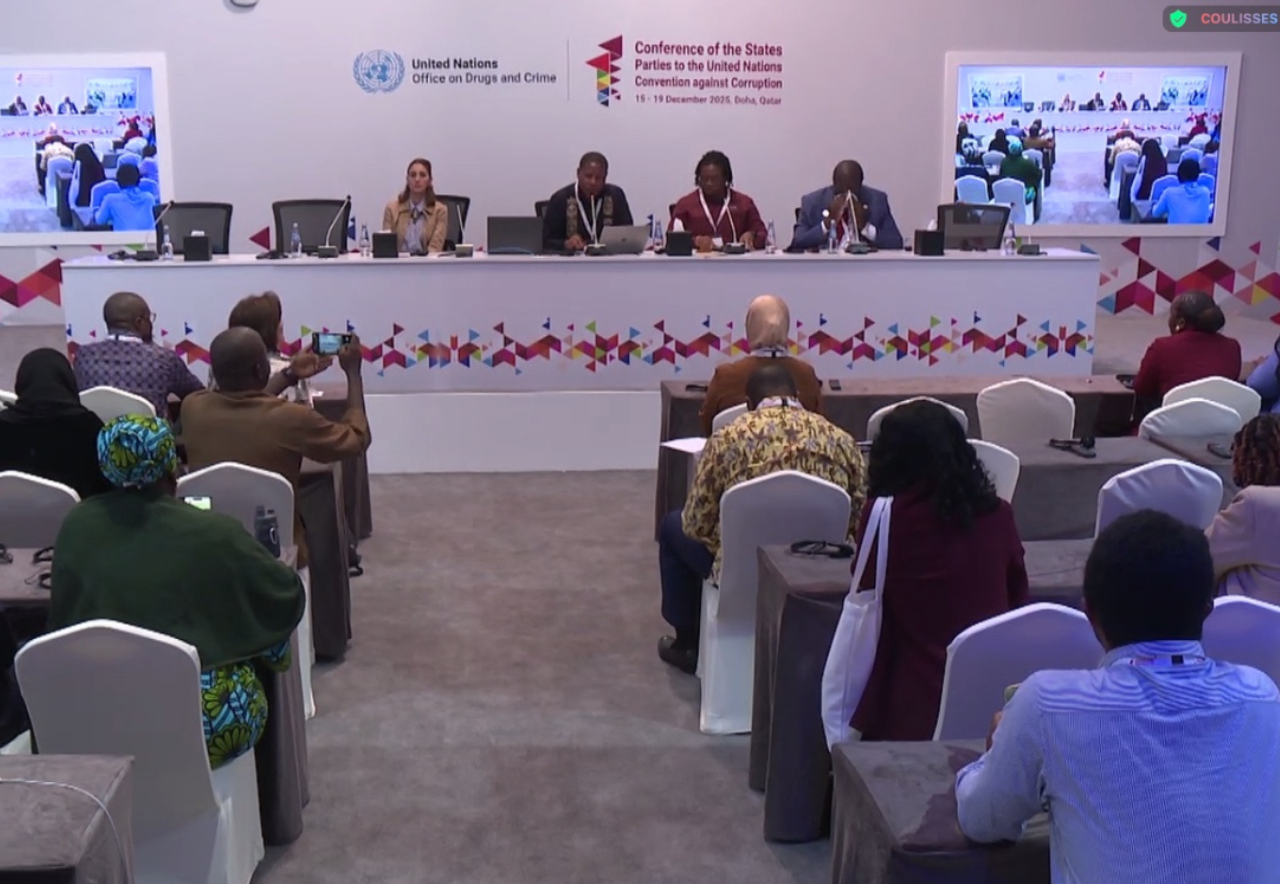
EG Justice participated in a panel discussion marking International Human Rights Day on December 10, 2024, during an annual conference organized by Amnesty International USA, the Anti-Corruption Advocacy Network (ACAN), and the Forum on the Arms Trade. The conference theme was "Building Community Connections for Better Policy: Arms Trade, Human Rights, and Anti-Corruption."
During the panel, EG Justice highlighted a troubling shift in U.S. foreign policy toward Equatorial Guinea. While previous administrations attempted to balance economic interests–particularly those tied to American oil companies–with support for human rights and anti-corruption efforts, recent policy decisions suggest an increasing willingness to overlook governance violations to advance narrow geopolitical objectives.
EG Justice also flagged a concerning trend of expanded engagement with Equatorial Guinea’s controversial leadership. Historically, the U.S. maintained cautious distance from Vice President Teodoro Nguema Obiang Mangue due to well-documented corruption and money laundering allegations, including a settlement with the U.S. Department of Justice. The current administration, however, has adopted a more open posture, even granting him a visa, in a departure from prior State Department practice.
In addition, EG Justice noted an increase in U.S. military assistance to Equatorial Guinea, which rose to $500,000—an additional $102,000— from the previous year. This increase occured despite Equatorial Guinea's Tier 3 ranking on the Trafficking in Persons Report and credible reports of torture by security forces. A presidential waiver was required to bypass statutory restrictions that prohibit security assistance to governments implicated in serious human rights violations.
The panel also raised concerns about a $7.5 million U.S. payment in October 2025 to host third-country nationals. Testimony from the deportees confirmed that they were held at a hotel owned by President Obiang’s brother.
Equatorial Guinea lacks effective institutional checks and balances to guarantee the safety and due process of deportees. Despite ranking 173rd of 180 countries on Transparency International's Corruption Perceptions Index and possessing a high per capita income from oil, Equatorial Guinea continues to suffer from extreme inequality and widespread poverty. EG Justice warned that continued U.S. engagement without strong human rights conditions risks reinforcing the world's longest-running dictatorship.