


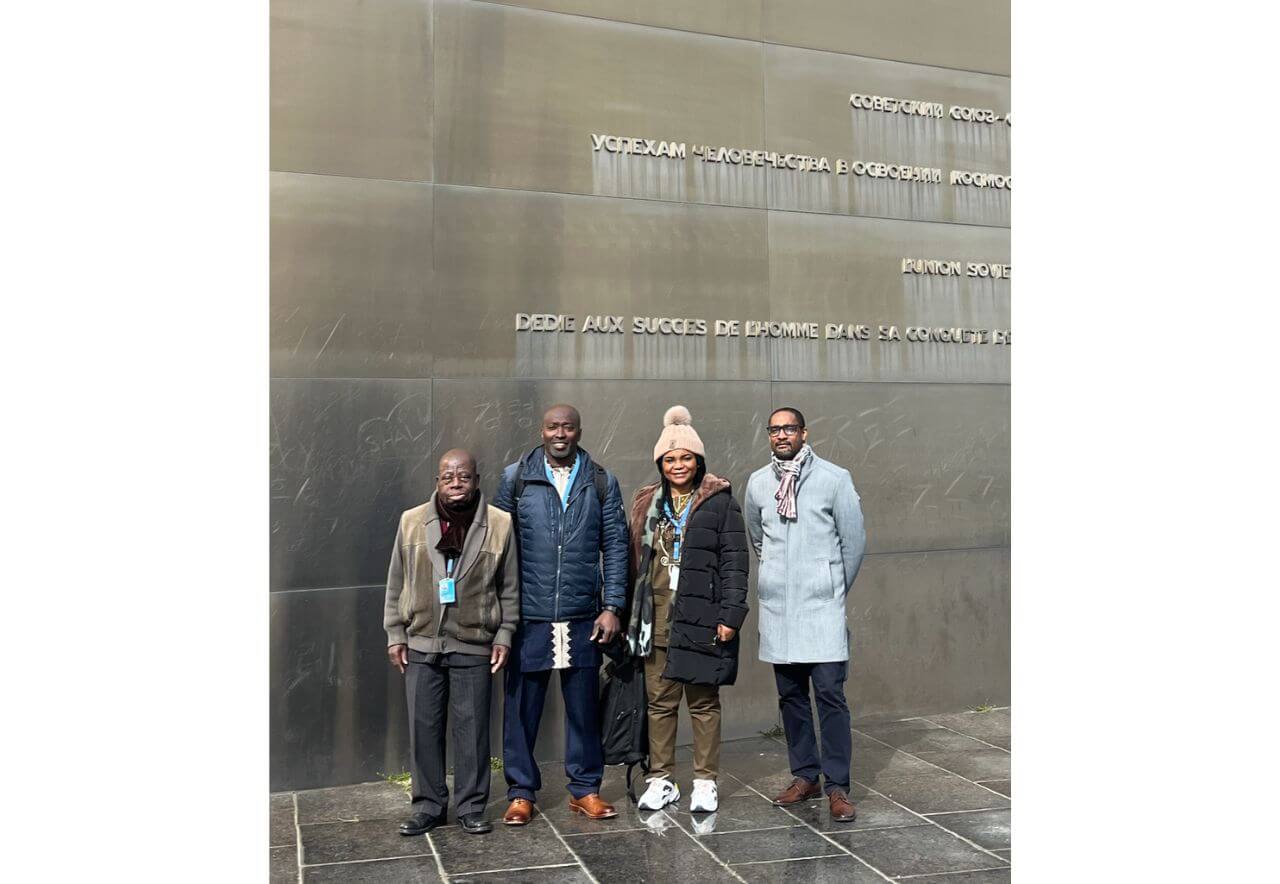
(Geneva, Switzerland. March 30-April 2, 2026.) EG Justice, in collaboration with the Equatoguinean Commission of Jurists* (CEJ) and the African Association of Education for Development** (ASAFED), held a series of high-level meetings in Geneva from March 30 to April 2, 2026, aimed at advancing international accountability for human rights violations in Equatorial Guinea.
The delegation included Mr. Cruz Melchor Eya Nchama representing both CEJ and ASAFED, Lucas Olo Fernandes and Maria Jesus Bikene Obiang representing CEJ, and Tutu Alicante representing EG Justice.
Advocating for UN Human Rights Council Action
A central focus of the mission was engaging with member state delegations of the UN Human Rights Council to advocate for greater scrutiny and meaningful followup on Equatorial Guinea’s human rights commitments between Universal Periodic Review sessions.
This call is grounded in persistent and well-documented concerns. Elections in Equatorial Guinea continue to lack transparency and credibility. Detention conditions remain alarming, marked by severe overcrowding, inadequate food, lack of privacy, and systematic denial of basic rights. Although the death penalty has been formally removed from the civil code, it continues to be applied to civilians under the Military Code of Justice.
The recently adopted Penal Code further raises concern by introducing the vague offense of “abusive exercise of fundamental rights,” a provision that contravenes the International Covenant on Civil and Political Rights and poses a direct threat to civil society, journalists, and human rights defenders.
These violations are compounded by widespread poverty—affecting more than 60 percent of the population—alongside entrenched corruption and unequal access to resources. Together, these factors underscore the urgent need for sustained international oversight and accountability mechanisms.
Addressing the Plight of Third-Country Asylum Seekers
In meetings with UN Human Rights Officers, the delegation raised urgent concerns regarding the transfer by the United States of America of third-country asylum seekers to Equatorial Guinea. Recent deportations of individuals from countries including Angola, Ethiopia, Eritrea, and Georgia among others, have placed more than two dozen individuals in precarious and unsafe conditions.
Many of these individuals fled persecution in their home countries and now face renewed risks. They are reportedly confined in a hotel serving as a detention facility, with restricted communication and limited access to legal or humanitarian support. Even in cases of serious illness–including malaria and food poisoning–acess to adequate medical care has been severely limited.
Moreover, the Equatoguinean government has reportedly re-deported more than 80 percent of these individuals–including members of the LGBTQ+ community, survivors of trafficking and enslavement, and victims of rape and torture–back to their countries of origin. These actions constitute a clear violation of the international principle of non-refoulement and raises grave humanitarian and legal concerns.
Raising Concerns Over Misuse of Confiscated Assets
The delegation also met with representatives of the Swiss government to discuss concerns regarding the repatriation of assets confiscated from Vice President Teodoro Nguema Obiang Mangue.
While an agreement between the Swiss and Equatoguinean governments allocates these funds to the construction of a health laboratory in Ciudad La Paz, significant concerns remain about the absence of independent oversight. EG Justice, CEJ, and ASAFED emphasized that, without robust safeguards and meaningful civil society participation, the project risks becoming yet another channel for the misappropriation of public resources, rather than delivering tangible benefits to the people.
Continued Commitment to Justice and Accountability
Through these engagements, EG Justice, CEJ, and ASAFED continued to reaffirm their commitment to amplifying the voices of victims of repression and corruption and to mobilizing sustained international action. The organizations will continue working with global partners to advance accountability, strengthen the rule of law, and promote the protection of fundamental rights in Equatorial Guinea.
===============================
*The Equatoguinean Commission of Jurists is a global network of Equatoguinean legal professionals committed to defending human rights and the rule of law in Equatorial Guinea. It provides legal representation and support to individuals and civil society organizations facing repression. Furthermore, it documents abuses, advocates for judicial independence, and raises international awareness of systemic human rights violations–often serving as a critical legal lifeline for those denied access to justice within the country.
**ASAFED is a Geneva-based nonprofit organization dedicated to promoting social development, human rights, and community empowerment on the African continent. Through advocacy, civic education, and grassroots initiatives, ASAFED works to support vulnerable populations, including women, children, and marginalized communities, promote accountability, and advance human rights.