


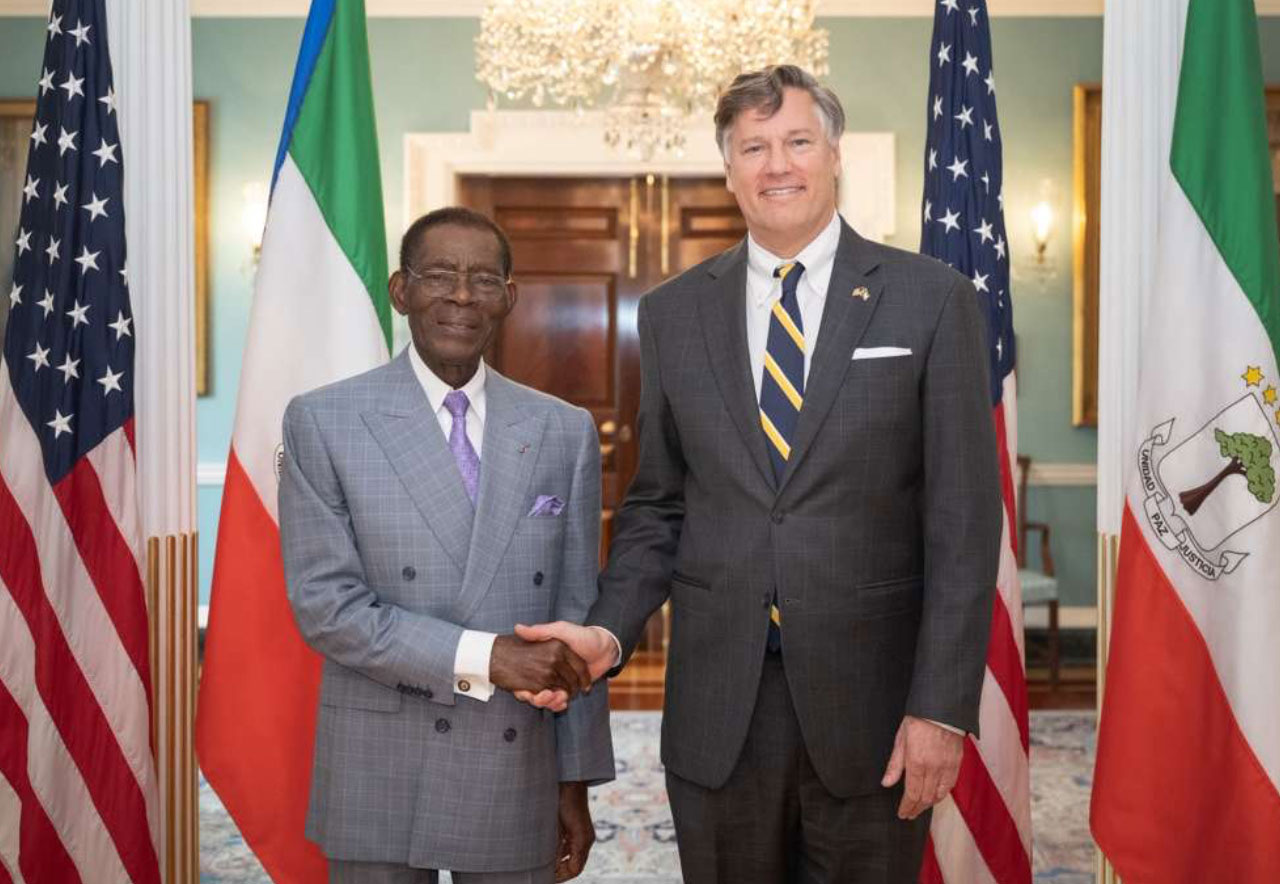
(Washington, D.C., April 17, 2026) -- EG Justice is deeply concerned about the recent meeting between Teodoro Obiang Nguema Mbasogo and U.S. Deputy Secretary of State Christopher Landau, and the subsequent statement issued by the U.S. Department of State, which makes no reference to human rights, the rule of law, corruption, or democratic governance.
While the discussions reportedly focus on expanding cooperation in the security and economic sectors—including opportunities for U.S. oil companies—the absence of any mention of governance concerns in a country long characterized by systemic corruption and repression is both striking and alarming.
“What is most concerning is not what is being said, but what is being left unsaid,” said Tutu Alicante, Executive Director of EG Justice. “The omission of human rights, rule of law, and corruption—at a moment when President Obiang appears to be preparing a transfer of power to his son—sends a dangerous signal about U.S. priorities.”
Equatorial Guinea remains a country of immense natural wealth, yet the majority of its population continues to live in poverty. This disparity reflects ongoing governance failures, including corruption and the mismanagement of public resources. Increased economic engagement—particularly in the oil sector—without clear safeguards for transparency and accountability risks reinforcing these patterns.
EG Justice is particularly concerned about the role of U.S. oil companies, which continue to operate in the country and stand to benefit from expanded cooperation. Investment without strong anti-corruption safeguards risks reinforcing a system in which public wealth does not translate into public benefit.
“U.S. policy cannot ignore corruption and governance failures while promoting expanded commercial ties,” said Bennett Freeman, former Chair of the EG Justice Board. “Companies operating in Equatorial Guinea face clear responsibilities. Without transparency and accountability, investment risks entrenching inequality and undermining long-term stability.”
The timing of this renewed U.S. engagement raises additional concerns. While geopolitical considerations—including growing Russian and Chinese influence and the potential development of military infrastructure in the region—may be shaping policy decisions, EG Justice stresses that strategic competition must not come at the expense of fundamental rights and democratic principles.
EG Justice is also deeply concerned about ongoing cooperation between the United States and Equatorial Guinea in the transfer and chain refoulement of third-country nationals. Since late 2025, Equatorial Guinea has reportedly accepted dozens of such individuals in exchange for financial compensation, raising serious legal and humanitarian concerns, particularly given the country’s documented human rights record.
“Outsourcing migration responsibilities to a country with a well-documented record of human rights abuses is deeply troubling,” said Alicante. “It places vulnerable individuals at risk and undermines the very international standards the United States seeks to uphold.”
EG Justice further emphasizes that any potential support for Equatorial Guinea in securing financing from international institutions, including the International Monetary Fund, must be conditioned on meaningful, verifiable reforms. Past experience demonstrates that financial support without accountability risks reinforcing corruption rather than improving the well-being of the population.
The upcoming visit of Pope Leo XIV to Equatorial Guinea presents an important moment of reflection. EG Justice notes that previous high-level engagement, including the 1982 visit of Pope John Paul II, raised hopes but did not lead to lasting improvements in governance or human rights.
“Equatorial Guinea has seen moments of hope before,” Alicante said. “The question now is whether this visit will simply repeat the past—or help advance a more just, accountable, and dignified future.”
EG Justice calls on the United States and international partners to ensure that engagement with Equatorial Guinea is firmly grounded in transparency, accountability, and respect for fundamental rights. Economic and security cooperation must not come at the expense of the principles that underpin human dignity, democratic governance, and long-term stability.